UC Davis Information & Educational Technology

Email Story Email this Story Print Story Print this Story

New eduroam service simplifies Internet access for traveling academics

05/04/2011

The campus has joined eduroam, a service that gives UC Davis faculty, students and staff free, easy and secure access to wireless networks when they travel to other universities all across the world.

Eduroam, short for "education roaming," began in Europe as an international resource for academics. The basic idea: People from any participating campus can use eduroam, with minimal effort, to access the encrypted wireless network at any other participating institution when they visit.

UC Davis customers sign in by using a variation of their UC Davis computing account (Kerberos) login. The location they're visiting transmits the authentication request back to UC Davis, which then verifies the login.

"There are two real benefits to our campus," said Mark Redican, director of Communication Resources for Information and Educational Technology. "The first is that if you go to these other institutions, you can get wireless access without having to go through any special hoops."

"The second benefit is all those scholars, staff and students visiting here can do the same," Redican said.

UC Davis is one of the first 15 U.S. institutions of higher education to join eduroam. Others include UC San Diego, Tulane and Georgetown. Three dozen additional locations are testing or interested in joining, including UCLA, UC Berkeley, and the UC Office of the President.

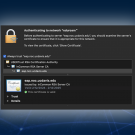
Anyone at UC Davis who has a Kerberos account can use eduroam. When they visit another eduroam location, they call up that university's wireless network, then find and click on the eduroam icon. Then they sign in by adding @ucdavis.edu to their UC Davis login. A person at UC Davis who logs in as schan, for example, would log in via eduroam as schan@ucdavis.edu.

Eduroam uses the same wireless equipment and support services as MoobileNet and MoobileNetX, so the cost of providing the service is minimal. The campus even saves a little on administrative costs, because eduroam users who visit UC Davis don't have to go through the process of obtaining a UC Davis guest account.

Eduroam uses the 802.1x authentication protocol. All wireless traffic between the customer's laptop and the wireless access point is encrypted.

Information about the service can be found on the UC Davis wireless service website. People will need to build an eduroam profile similar to MoobileNetX; instructions, plus other information on how to use eduroam, are available in an xbase article created by the campus IT Express Computing Services Help Desk.

Find more information about the service, including a list and map of eduroam members, at eduroamus.org/.


Email Story Back to main headlinesEmail Story Email this Story Print Story Print this Story

Stay connected

Add TechNews RSS feedAdd TechNews RSS Feed

Follow TechNews on twitterFollow TechNews on Twitter

Get weekly email updates Get Weekly email updates

Send your tech story ideas Send your tech story ideas


Most viewed stories

Levin addresses emerging topics of academic tech in UC Davis blog (Dec. 12, 2012)

UC student cited for illegal file-sharing knocks down '12 myths' in video (Sept. 17, 2011)

New website can help you identify authentic campus email messages (Oct. 25, 2012)

New 'clickers' recommended for UC Davis faculty, students (June 29, 2012)

Search TechNews

Other IET publications

IET Report

IT Times

About TechNews

TechNews, produced by Information and Educational Technology, is a free online source of news and information about technology at UC Davis.

Learn more »